EDM
Sinker EDM for Deep Slots in Mold Inserts
What to put on the drawing when a blind slot has a tight corner, a deep wall or a finish that matters.
Sinker EDM is a candidate for a blind slot when a rotary cutter cannot reach its full depth or reproduce the required internal corner. Before quoting it, give the toolmaker the slot cross-section, the electrode approach direction, the maximum acceptable corner radius and the finish required on each working face. Those details affect electrode design, debris removal and how the completed slot can be inspected.
Key takeaways
- Check whether the slot is blind, open at one end, or continuous through the insert.
- Dimension the width, depth and corner zones separately. State the inspection sections.
- Ask how rough burning, finish burning and any polishing are represented in the quote.
Start with the geometry and the approach
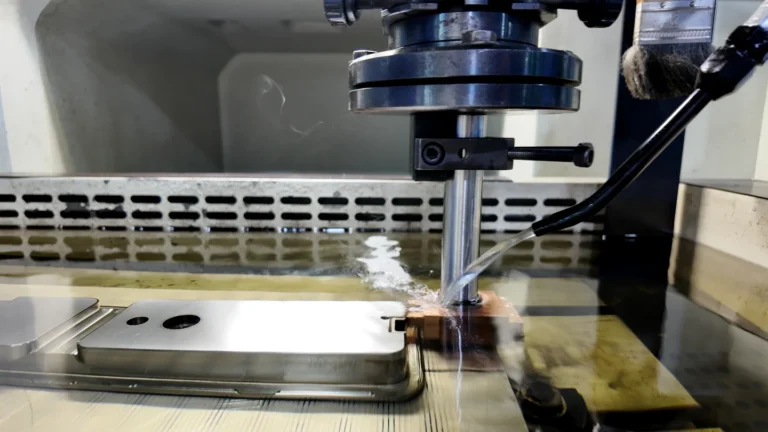
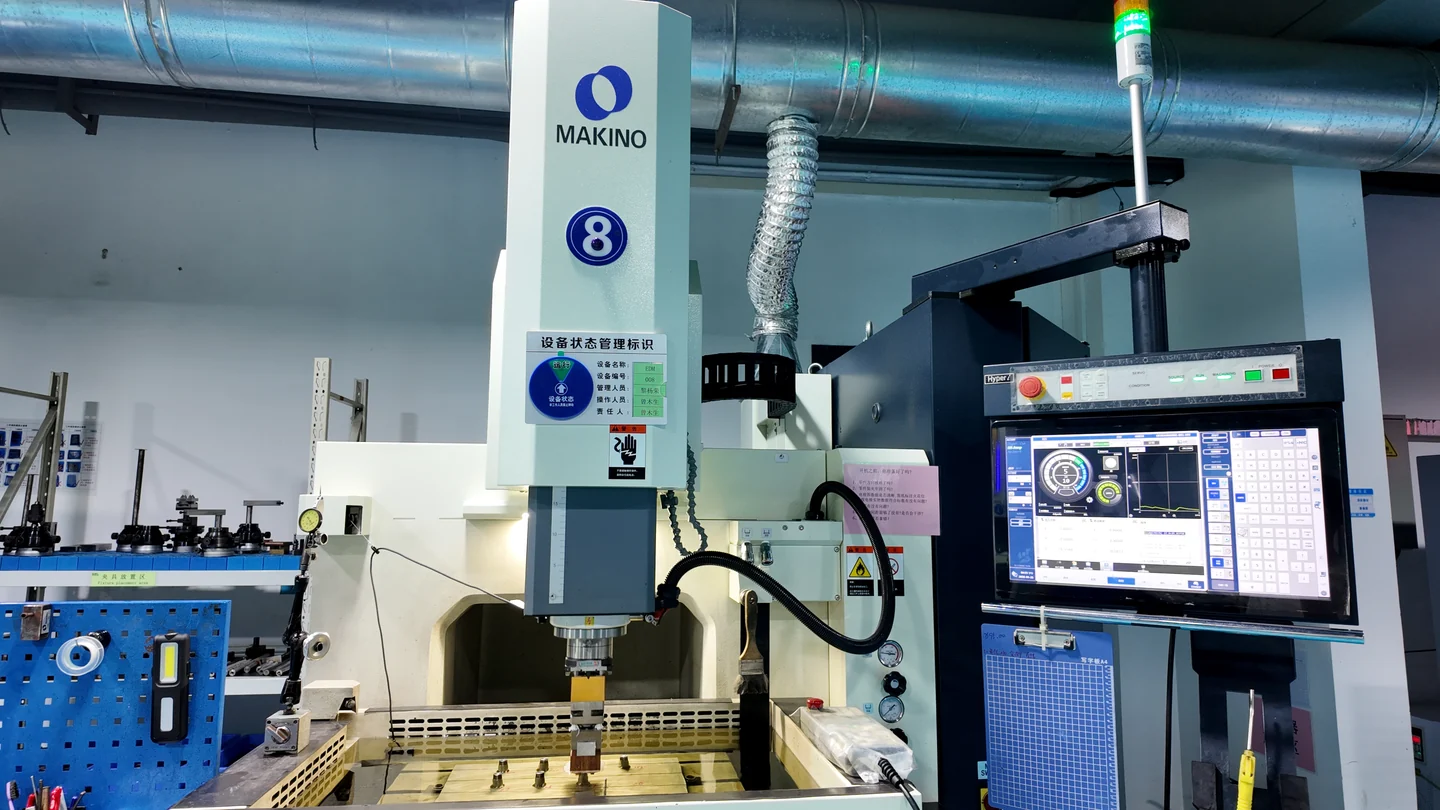
A shaped electrode approaches a conductive workpiece and electrical discharges remove material across a gap. The electrode is designed for the feature and the EDM process. In a mold insert, the resulting slot may form a plastic rib. The direction in which the electrode enters the steel, its clearance from nearby walls and the shape of the slot at the bottom all matter. Makino sinker EDM equipment and process overview.
Send a section through the deepest part of the slot and a plan view that shows the ends. A note that says “sharp corner” leaves a key quotation input undefined. Mark the corners that control molded geometry and give an acceptable radius or a design contact for clarification. Give draft direction and indicate whether the stated width applies at the mouth, at the bottom or at a defined depth. When steel geometry and the molding drawing use different reference directions, label them plainly.
The EDM and wire EDM process page describes the access decision. An accessible pre-milled recess may leave only the corner or bottom region for sinker finishing. For a through profile, the shop may consider wire EDM if it has a viable wire path and the geometry suits it.
What changes when the slot gets deeper?
As a narrow electrode penetrates, the path for moving debris away from the working gap becomes more restricted. Flushing and electrode jump can help clear that debris. Ask the shop to review any restriction on the approach, programmed motion or access around the top of the insert. A nearby wall or another machining feature may matter even when it does not appear in the slot detail. Makino demonstrates the use of high-speed electrode motion on narrow, deep rib features. Makino deep rib machining demonstration.
Electrode wear can affect corners, depth and repeatability. The shop may choose separate rough and finish electrodes or a different strategy for the most demanding surfaces. Specify the steel geometry and finish you need, and ask the quoting team to explain its electrode and finishing allowance. Clarify whether electrode manufacture is included and whether a future replacement insert will require making a new electrode. Tooling retention belongs in the purchasing agreement if it matters to repeat orders.
Specify finish by surface
Mark the sidewalls, slot bottom, blending radii and sealing or mating edges by function. Keep a roughness or texture callout tied to the applicable area and measurement method. If the application has a separate surface integrity requirement, state it on the drawing or purchasing specification and agree how conformity will be demonstrated. If the slot is polished, define where stock removal or rounding could change the useful width, depth or corner.
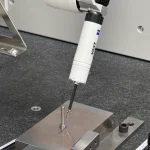
Agree on a feasible check before releasing the order. An instrument may reach the mouth comfortably and still have limited access to a deep wall or floor. Tell the shop which sections must be reported. If a critical feature is difficult to reach, ask what measurement access or alternative agreed verification is practical and what portion of the feature it covers. The guide to roughness measurement for mold inserts explains why the location and measurement settings belong with the result.
Example drawing review
A blind slot forms a rib on the molded part. The drawing gives one width, while the model shows drafted walls. Identify the width at a defined depth and provide the draft direction, root radius and bottom location. If the rib is cosmetic only on one face, identify that face for finish. The supplier can then price the electrode work and confirm whether it can report the required width at that depth.
Ask for a quote that covers verification
Send the current drawing and model, steel grade and condition, typical slot sections, the controlled radii and finish zones. Request an explanation of pre-machining, electrode work and finish passes, plus a list of critical dimensions the supplier can reach and measure. If multiple inserts share the geometry, specify whether the same geometry is required individually or across a matched set.
Review a blind slot with SENLAN
Send the insert drawing and a section through the deepest feature. Mark the working face, allowable radius and any dimension that must be checked below the mouth.